Skip to content
  • facebook.com
  • twitter.com
  • t.me
  • instagram.com
  • youtube.com
Electrical Engineering

Powering Knowledge. Engineering the Future.

Subscribe
  • Home
  • Online Tools
  • Electrical Engineering App
  • Home
  • induction motors
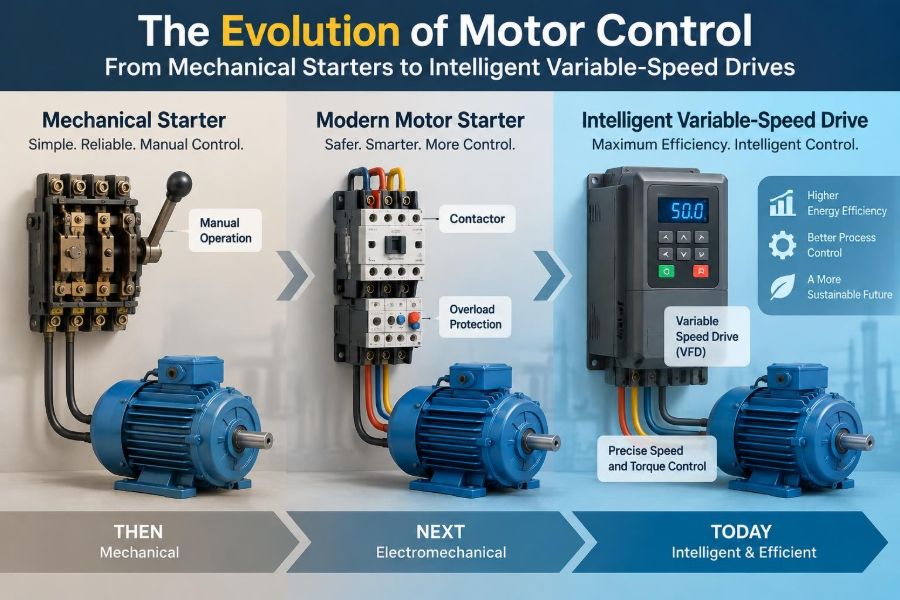
⚡ The Evolution of Motor Control: From Mechanical Starters to Intelligent Variable-Speed Drives
Posted inFeatured

⚡ The Evolution of Motor Control: From Mechanical Starters to Intelligent Variable-Speed Drives

Posted by admin November 19, 2026
From contactors and overloads to VFDs, vector control, and connected drives: learn how motors gained smoother starts, smarter speed control, and better diagnostics. ⚙️🔌🧠
Read More
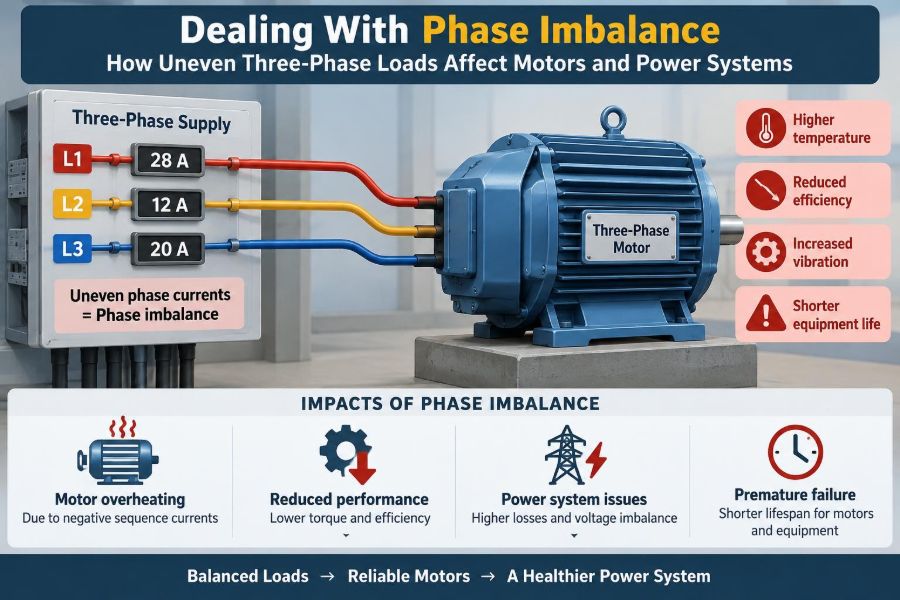
⚡ Dealing With Phase Imbalance: How Uneven Three-Phase Loads Affect Motors and Power Systems
Posted inFeatured

⚡ Dealing With Phase Imbalance: How Uneven Three-Phase Loads Affect Motors and Power Systems

Posted by admin November 15, 2026
Unequal three-phase loads can quietly raise motor temperature, strain conductors, and waste capacity. Learn what to measure, where to look, and how to fix the cause. 🔧📊⚡
Read More
⚡ Real-World Uses of Power Factor Correction in Factories, Commercial Buildings, and Motor Systems
Posted inFeatured

⚡ Real-World Uses of Power Factor Correction in Factories, Commercial Buildings, and Motor Systems

Posted by admin November 11, 2026
See why factories and commercial buildings use capacitor banks, where they help, and when harmonics or drives make simple fixes risky. 🏭🔌📊
Read More
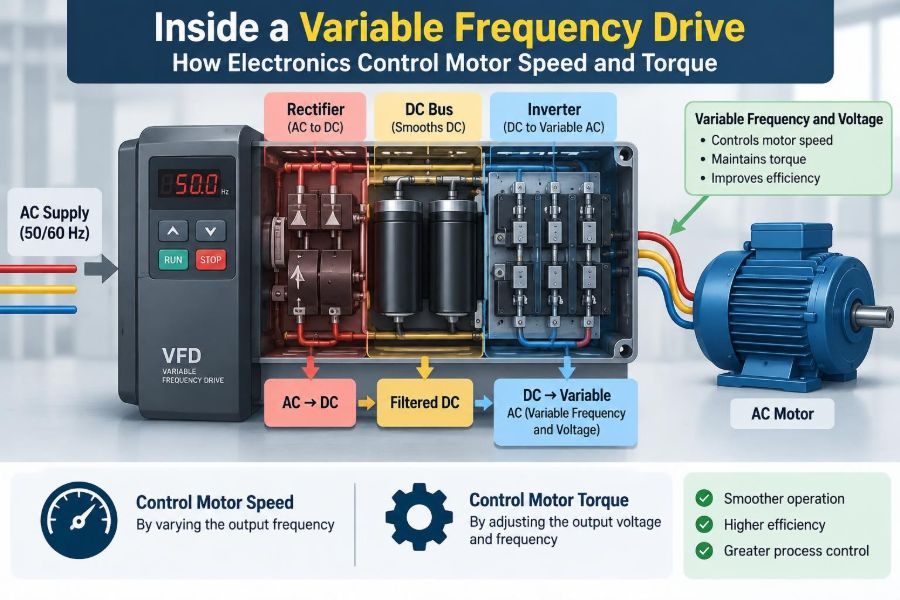
⚡ Inside a Variable Frequency Drive: How Electronics Control Motor Speed and Torque
Posted inFeatured

⚡ Inside a Variable Frequency Drive: How Electronics Control Motor Speed and Torque

Posted by admin October 29, 2026
Follow power through the rectifier, DC bus, and PWM inverter—and learn why torque, braking, cable length, and motor cooling matter in real VFD systems. 🔧⚙️⚡
Read More
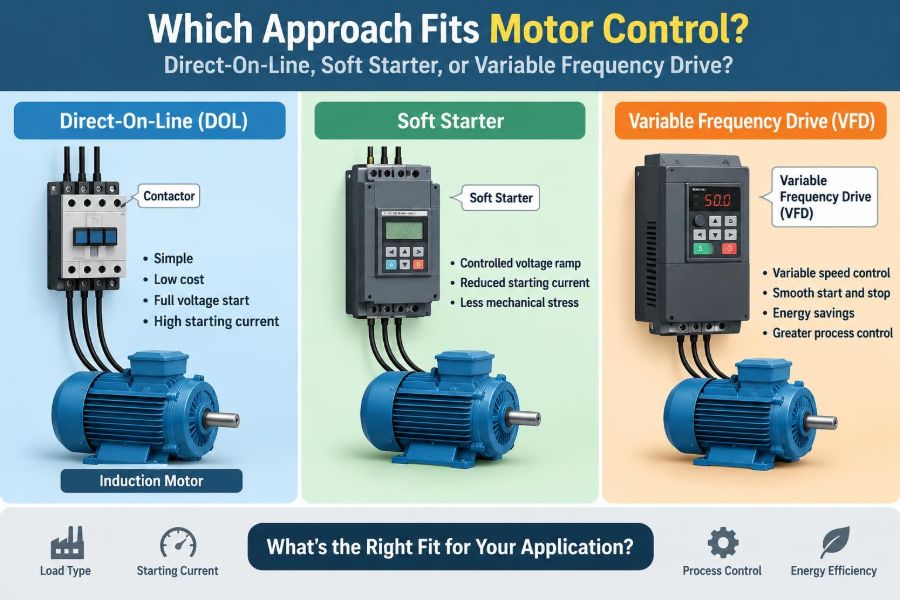
⚡ Which Approach Fits Motor Control: Direct-On-Line, Soft Starter, or Variable Frequency Drive?
Posted inFeatured

⚡ Which Approach Fits Motor Control: Direct-On-Line, Soft Starter, or Variable Frequency Drive?

Posted by admin October 28, 2026
A motor can start with any of them—but the right choice depends on torque, speed, power quality, and the machine itself. Compare the trade-offs clearly. 🔧⚡📈
Read More
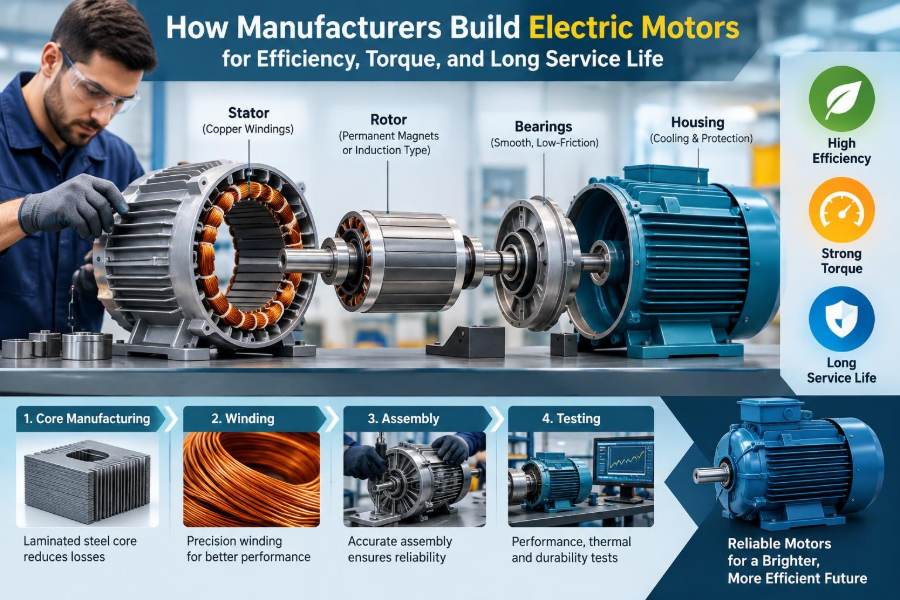
⚡ How Manufacturers Build Electric Motors for Efficiency, Torque, and Long Service Life
Posted inFeatured

⚡ How Manufacturers Build Electric Motors for Efficiency, Torque, and Long Service Life

Posted by admin October 18, 2026
From copper windings and magnetic steel to cooling, bearings, and inverter control, see how manufacturers balance torque, efficiency, and durability in every motor. 🔧🌀⚡
Read More
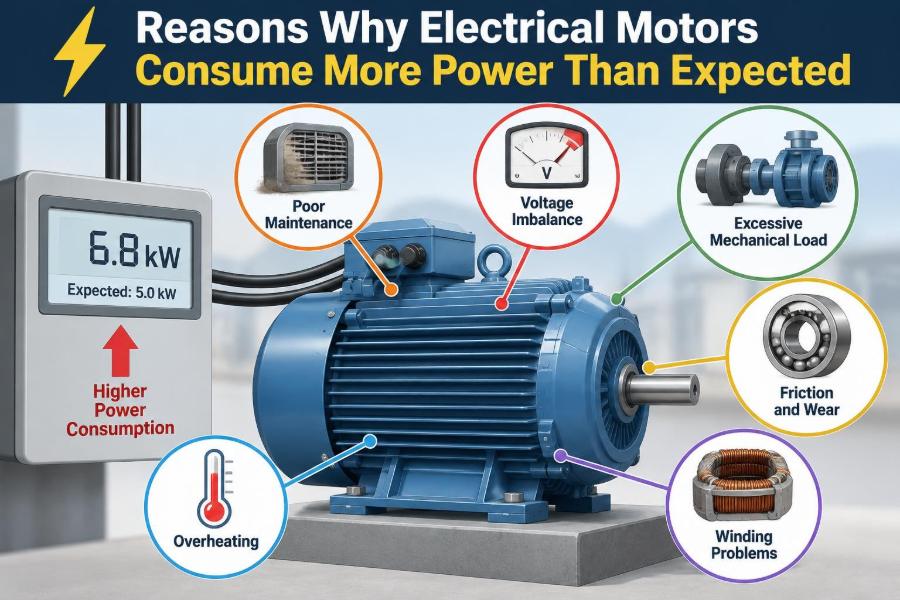
⚡ Reasons Why Electrical Motors Consume More Power Than Expected
Posted inFeatured

⚡ Reasons Why Electrical Motors Consume More Power Than Expected

Posted by admin October 17, 2026
A high motor bill is not always a motor fault. Learn how load, voltage, VFD settings, friction, heat, and runtime can raise consumption—and what to check first. 🔧📊⚡
Read More
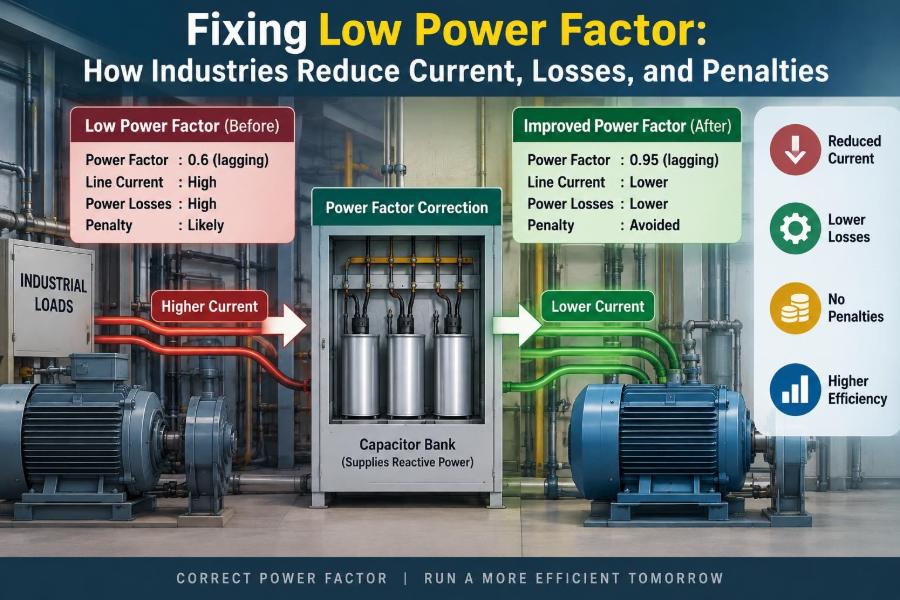
⚡ Fixing Low Power Factor: How Industries Reduce Current, Losses, and Penalties
Posted inFeatured

⚡ Fixing Low Power Factor: How Industries Reduce Current, Losses, and Penalties

Posted by admin October 15, 2026
See how reactive power raises current, heats feeders, consumes transformer capacity, and can affect utility charges—plus how to choose capacitors safely around harmonics. 🏭📊🔧
Read More
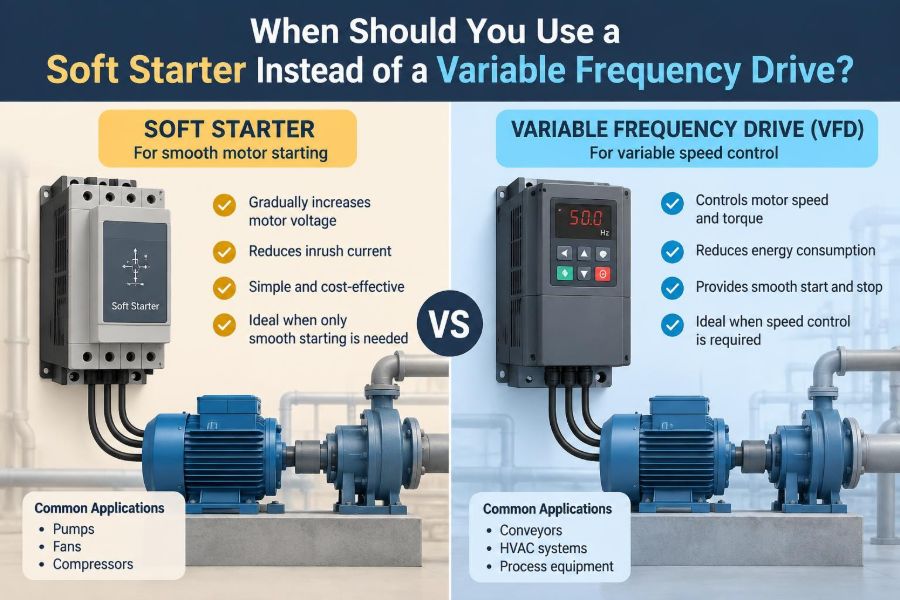
⚡ When Should You Use a Soft Starter Instead of a Variable Frequency Drive?
Posted inFeatured

⚡ When Should You Use a Soft Starter Instead of a Variable Frequency Drive?

Posted by admin October 9, 2026
A gentle start does not always require speed control. Learn where soft starters shine, when VFDs earn their complexity, and which motor-load details decide the outcome. 🔧⚙️💡
Read More
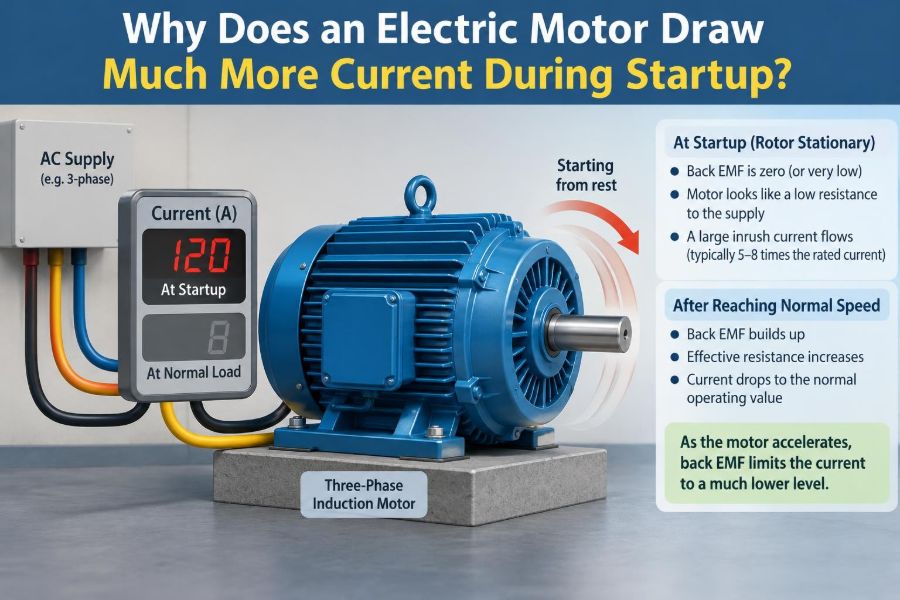
⚡ Why Does an Electric Motor Draw Much More Current During Startup?
Posted inFeatured

⚡ Why Does an Electric Motor Draw Much More Current During Startup?

Posted by admin October 8, 2026
A motor at rest has a crucial electrical property missing: back EMF. See why that creates inrush current, voltage dips, trips, and smarter starting choices. 🔄⚙️⚡
Read More

Posts pagination

1 2 Next page

Recent Posts

  • ⚡ The Science Behind Electrical Corona Discharge: Why High-Voltage Transmission Lines Sometimes Glow and Buzz
  • ⚡ Why Neutral Wires Can Carry Unexpectedly High Current in Modern Three-Phase Systems
  • ⚡ Understanding Arc Flash: Why Electrical Faults Can Release Enormous Energy in Milliseconds
  • ⚡ The Science Behind Transformer Inrush Current and Why It Can Trip Protection Devices
  • ⚡ Ground Faults Explained: How Unwanted Current Paths Create Electrical Safety Risks

Recent Comments

No comments to show.

Archives

  • November 2026
  • October 2026
  • September 2026
  • August 2026
  • November 2025
  • July 2025
  • May 2025
  • March 2025
  • February 2025
  • January 2025
  • October 2024
  • February 2022
  • December 2021
  • November 2021
  • October 2021
  • August 2021
  • July 2021

Categories

  • Basics
  • Circuit Design
  • Design of electrical machines
  • Digital logic system
  • Display Technology
  • Electric Vehicle
  • Electrical Engg2
  • Electrical machines
  • Electricity
  • Featured
  • High voltage
  • Linear integrated circuits and applications
  • measurement and instrumentation
  • Medical Technology
  • power system
  • Power System Operation and Control
  • Protection Switchgear
  • Renewable Energy Systems
  • Telecommunication systems
  • Transmission and distribution
  • Uncategorized
Copyright 2026 — Electrical Engineering. All rights reserved. Bloghash WordPress Theme
Scroll to Top